
From ‘Someone Should Fix This’ to ‘I’ll Fix This’: Ending the Professional Complainer Epidemic
We’ve all been in that code review where someone drops a comment like “This approach is problematic” and then… nothing. No suggested alternative. No explanation of what makes it problematic. Just a blocking comment that leaves you scratching your head, wondering if they expect you to read their mind or if they’re planning to follow up with actual guidance.
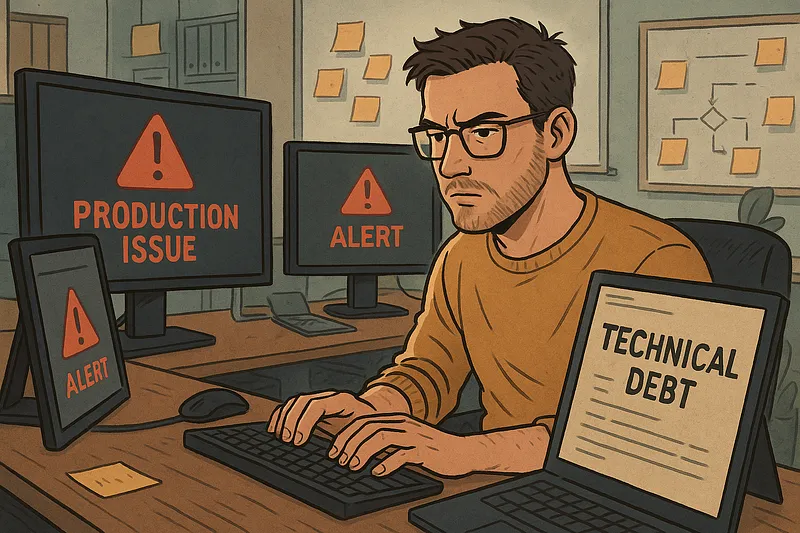
That’s the professional complainer in action — and they’re everywhere in our engineering organizations.
The Problem: Observers Disguised as Engineers
Let’s be brutally honest about what professional complaining looks like in practice. These are the engineers who have perfected the art of problem identification while treating solution implementation like someone else’s job:
“This codebase is a mess” (but they never refactor anything) “Our deployment process sucks” (but they don’t write automation) “This framework is terrible” (but they don’t propose alternatives) “The tests are flaky” (but they don’t fix the flaky ones they encounter)
You’ll find them in every retrospective, armed with the same complaints sprint after sprint. They’ve become sophisticated at identifying what’s broken while somehow never being the person who has to fix it.
Why Smart Engineers Become Professional Complainers
Here’s what took me years to understand: this behavior isn’t laziness — it’s psychology. Several forces conspire to turn solution-oriented engineers into chronic complainers:
Complaining Feels Like Contributing: Your brain gets that dopamine hit from being the smart person who spotted the problem. It’s intellectual satisfaction without the messy business of implementation risk.
The Safety of Criticism: As Theodore Roosevelt observed, “It is not the critic who counts; not the man who points out how the strong man stumbles, or where the doer of deeds could have done them better. The credit belongs to the man who is actually in the arena.” Criticism is safe — you can’t fail at pointing out someone else’s failure.
Learned Organizational Helplessness: In dysfunctional companies, engineers learn that fix attempts get shot down, budgets rejected, and improvements deprioritized. Eventually, they stop trying and just document the problems instead.
The Expertise Trap: Senior engineers are particularly vulnerable because they can see problems everywhere. Their experience makes them excellent problem-identifiers but sometimes terrible problem-prioritizers.
Responsibility Diffusion: This is the engineering version of the classic “bystander effect” studied by psychologists Darley and Latané. Their research showed that the more people present during an emergency, the less likely any individual is to help. In engineering terms: a critical bug in a 5-person startup gets fixed immediately, but the same bug in a 500-person engineering organization becomes “someone else’s problem.” The larger your engineering team, the more likely this dysfunction becomes.
Why This Behavior is Engineering Cancer
Professional complainers don’t just waste their own potential — they actively damage team dynamics in ways that compound over time:
Learned Helplessness Spreads: New team members quickly absorb the message that “this is just how things are.” Instead of asking “how can I improve this?”, they learn to ask “who should I complain to about this?”
Solution-Oriented Engineers Burn Out: This creates the classic “Hero Pattern” where certain engineers become the go-to people for every fix. Like “Brent” from The Phoenix Project, these heroes volunteer for action items, stay late for production issues, and somehow always own the hardest problems. The toxic cycle is predictable: complainers identify problems → heroes fix them → heroes get overloaded → heroes burn out and leave (or become complainers themselves) → new heroes emerge to repeat the cycle.
Technical Debt Accelerates: When problems are constantly identified but never addressed, you create a special kind of codebase where everything is “broken” but nothing ever gets fixed.
Decision Paralysis Sets In: When everything is “problematic,” nothing gets prioritized. Teams become paralyzed by the sheer volume of identified issues with no clear path forward.
As Leo Tolstoy once wrote: “Everyone thinks of changing the world, but no one thinks of changing himself.” In engineering terms: everyone thinks of changing the codebase, but no one thinks of changing the line of code they’re currently writing.
What You Can Do About It
If you recognize this pattern in your team — or worse, in yourself — here’s how to break the cycle:
For Individual Engineers
Implement the One-Fix Rule: If you complain about something twice, you must either fix it or stop complaining. This isn’t about silencing feedback — it’s about converting observers into owners.
Practice Solution-First Complaints: Every problem statement must include “and I think we should…” Don’t just identify what’s broken; propose what should replace it.
Ask the Ownership Question: When someone raises a problem, respond with “What are you going to do about it?” Not accusatory, just redirecting from observation to action.
For Engineering Leaders
Track Complaint-to-Fix Ratios: In retrospectives, note who raises issues and who volunteers for action items. The patterns will surprise you.
Normalize Small Improvements: Make incremental fixes part of regular work, not heroic efforts. When fixing things becomes normal, complaining about them becomes unnecessary.
Time-box the Complaining: Allow venting but set limits. “We have five minutes to identify problems, then we’re spending the rest of our time solving them.”
For Organizational Level change
Fix the Incentive Systems: Stop rewarding problem identification as sufficient contribution. Architecture/Design reviews should focus on proposed solutions, not just criticism. Code reviews should suggest fixes, not just point out flaws.
Follow Up on Action Items: The difference between functional and dysfunctional retrospectives isn’t the quality of problem identification — it’s whether identified problems get assigned owners and deadlines.
Shift from Consumer to Creator Mindset: Challenge the assumption that problems are someone else’s job. When an engineer says “this tool doesn’t work for our use case,” the response should be “how do we modify it or build what we need?”
The Bottom Line
Engineering is applied problem-solving. If you’re just identifying problems without solving them, you’re not engineering — you’re expensive quality assurance.
We don’t need more sophisticated ways to complain about technical debt. We need more engineers willing to pay it down, one small improvement at a time. We don’t need more elaborate post-mortems about what went wrong. We need more people volunteering to implement what should go right.
The difference between a professional complainer and a professional engineer isn’t the ability to spot problems — it’s the courage to solve them. As Henry Ford wisely observed: “You can’t build a reputation on what you are going to do.”
What broken thing in your codebase are you going to fix this week?